Tyra
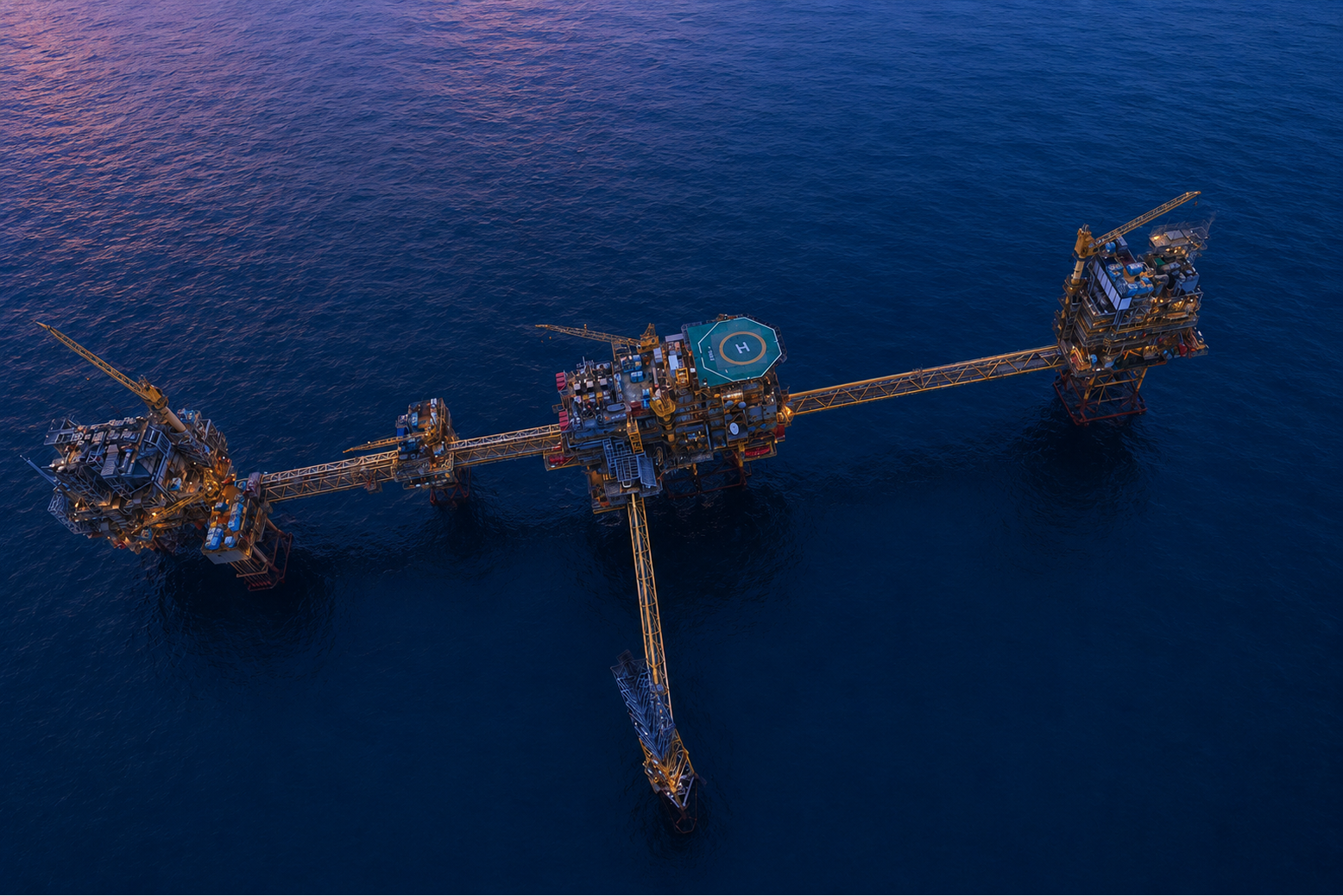
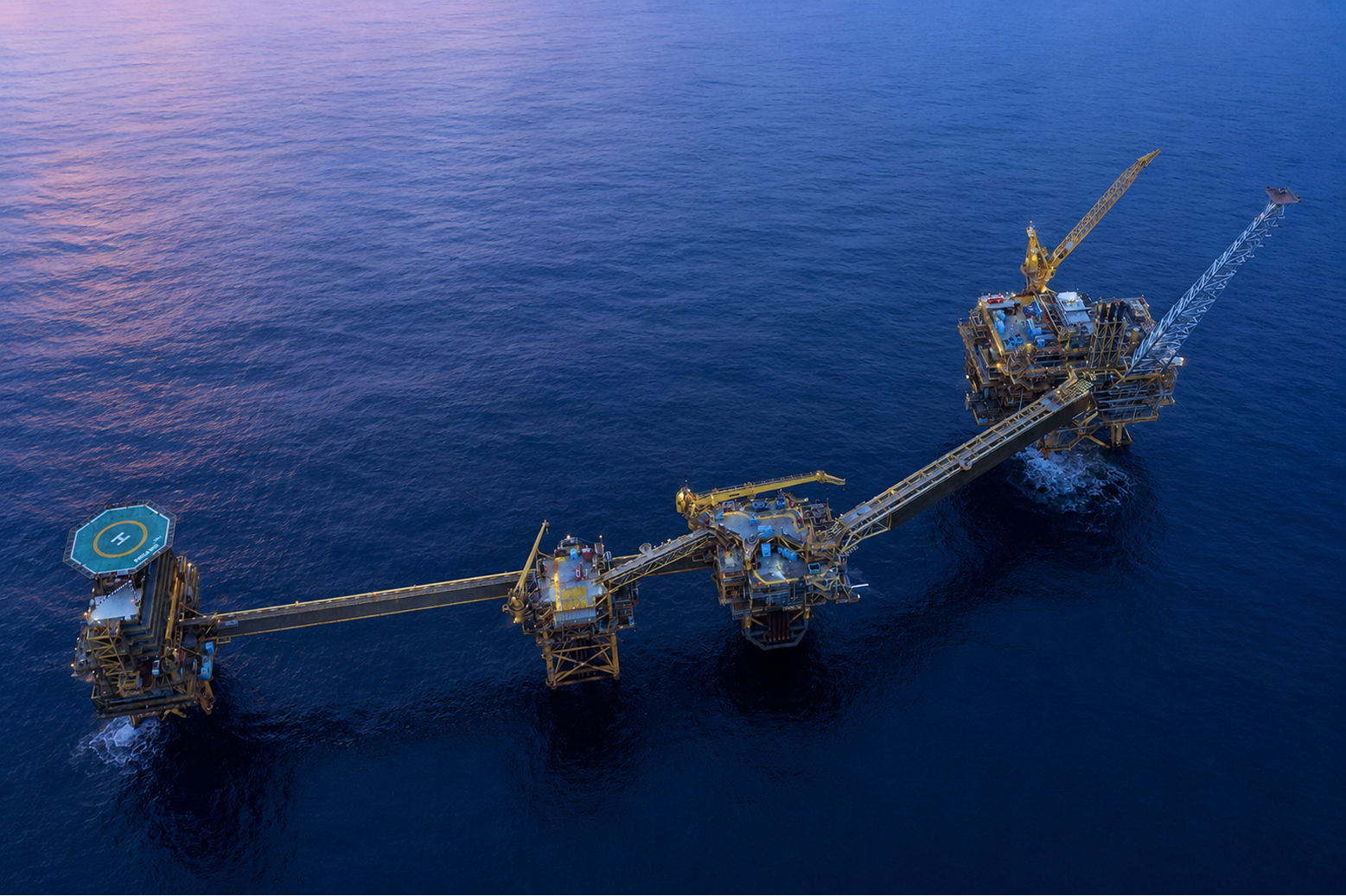
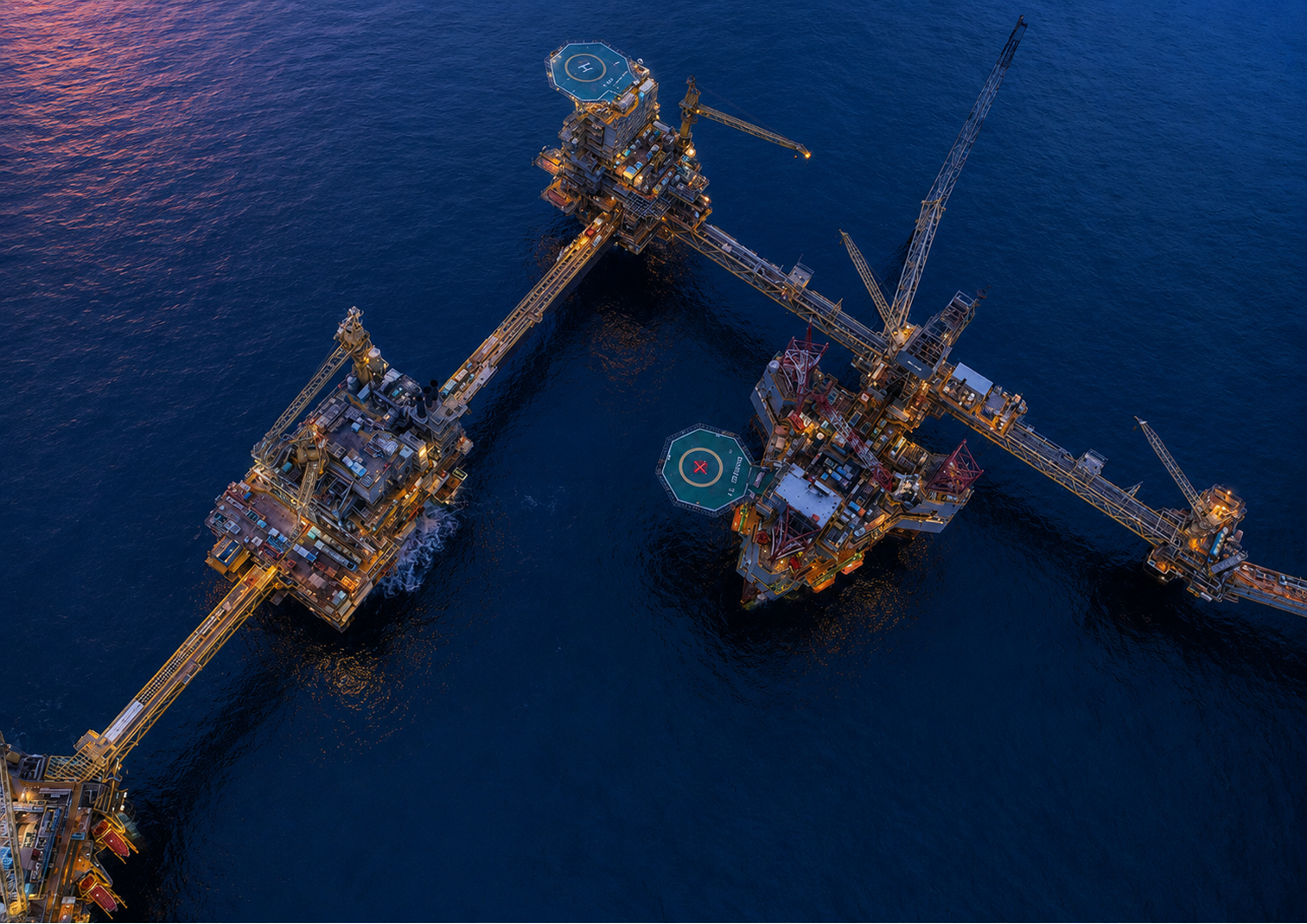
The Tyra field, discovered in 1968 and brought onstream in 1984, is the largest gas-condensate field in the Danish North Sea. The Tyra Hub is the central processing and export hub for Danish gas, handling more than 90% of the country’s production and integrating output from across the Danish Underground Consortium.
Following the redevelopment of Tyra, which returned to operation in 2025, the Tyra Field is now home to one of the world’s most advanced offshore installations, supporting efficient and sustainable energy production.
Overview
Tyra produces gas and condensate from chalk reservoirs in the Ekofisk and Tor formations. The reservoir consists primarily of gas with associated condensate, underlain by a thin oil zone, and is produced through depletion and gas expansion.
The field is located on a structural high and has been developed as an integrated hub, receiving production from multiple surrounding fields. Over time, reservoir compaction has led to subsidence of the seabed, shaping the need for major redevelopment of the facilities.
Field Development
The Tyra Hub comprises several interconnected fields and developments:
Tyra Main
- Discovered in 1968, onstream in 1984
- Gas-dominated field producing from chalk reservoirs
- Developed through multiple phases, including gas plateau production
- ~90+ wells drilled across Tyra Main and Tyra Southeast
Tyra Southeast (SE)
- Discovered later and onstream in the early 2000s
- Oil-dominated development linked to the Tyra system
- Developed to support both oil and gas recovery
Production is driven primarily by depletion, supported by gas expansion and long-term reservoir compaction.
Infrastructure and Exports
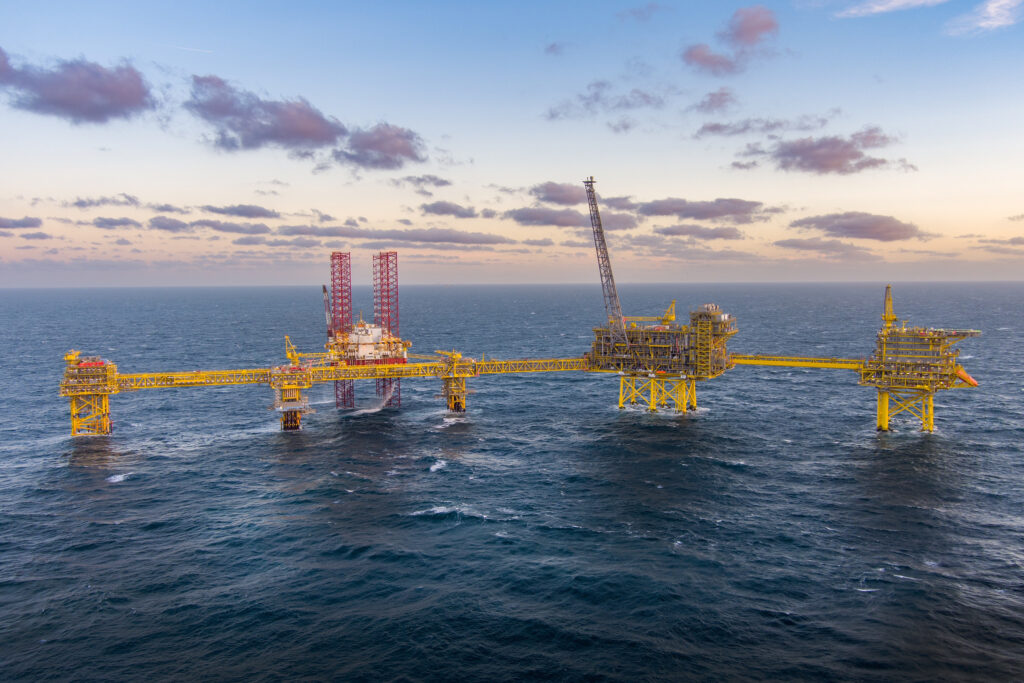
The Tyra Hub includes:
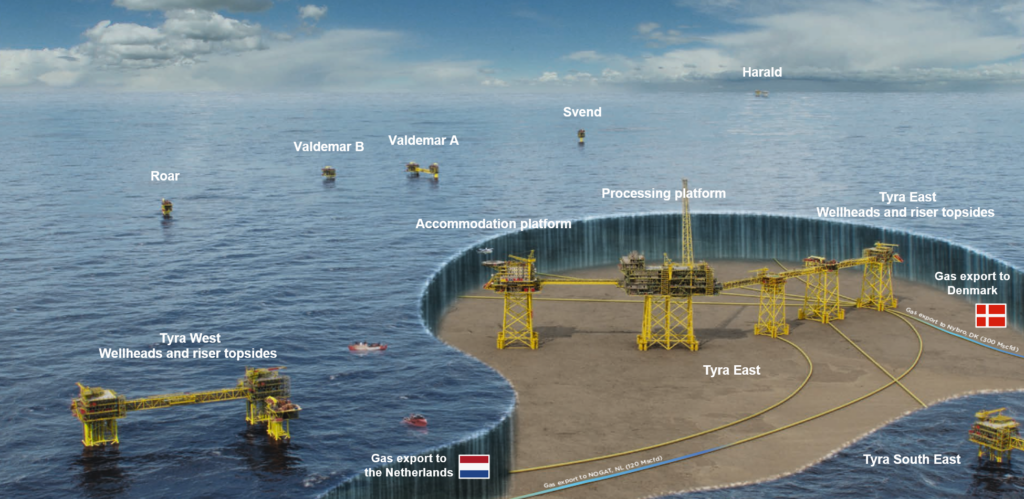
- Tyra East, Tyra West and Tyra Southeast
- Multiple satellite tie-backs including Valdemar, Roar, Harald, and Lulita
Gas is exported to shore through the Danish gas network. Condensate is exported via the oil system to Gorm. The Tyra Hub also provides flexibility through multiple gas export routes to Nybro in Denmark and Netherlands via the NOGAT system, strengthening overall system resilience.
Satellite fields
Valdemar is an oil and gas field producing primarily from Lower Cretaceous chalk, developed with horizontal wells and fracture stimulation, and driven by depletion and compaction.
Roar is a gas field with an oil rim, producing from Ekofisk and Tor chalk reservoirs, contributing gas and condensate to the Tyra system.
Harald is a gas-condensate development consisting of multiple accumulations, including recent developments in Jurassic sandstone reservoirs.
Lulita is a a smaller oil field producing from Jurassic sandstones, supported by aquifer and gas cap drive mechanisms.
Operational Development and Redevelopment
A defining feature of Tyra is the Tyra Redevelopment (Tyra II) project:
- Triggered by seabed subsidence of approximately 6 metres over 30 years
- Old infrastructure decommissioned and replaced with new installations
Production was temporarily suspended in 2019 and successfully restarted in 2024, with ramp-up continuing through 2025.
The redevelopment is expected to:
- Extend field life by several decades
- Improve operational efficiency
- Reduce emissions and operating costs
- Unlock significant remaining reserves
Today and Outlook
Today, Tyra is the central hub for gas processing and export in Denmark and a critical component of national energy infrastructure.
With the new Tyra II facilities now in operation, the hub is positioned for long-term, stable production and continued integration of surrounding fields. Its role as the backbone of Danish gas exports ensures that Tyra remains a cornerstone of the Danish offshore energy system.
- 2 Wellhead
- 9 Unmanned wellhead
- 1 Wellhead & processing
- 1 Processing
- 2 Accommodation
- 2 Risers (One unmanned)
- Tyra East to shore (Gas): 215km
- Harald to shore, Nybro (Gas): 260km
- Tyra East to Gorm E (Oil/Condensate): 16km
- Roar and Valdemar to Tyra W and Tyra E (Gas and Oil)
- Trym (Norway) to Harald, (Gas/Condensate)